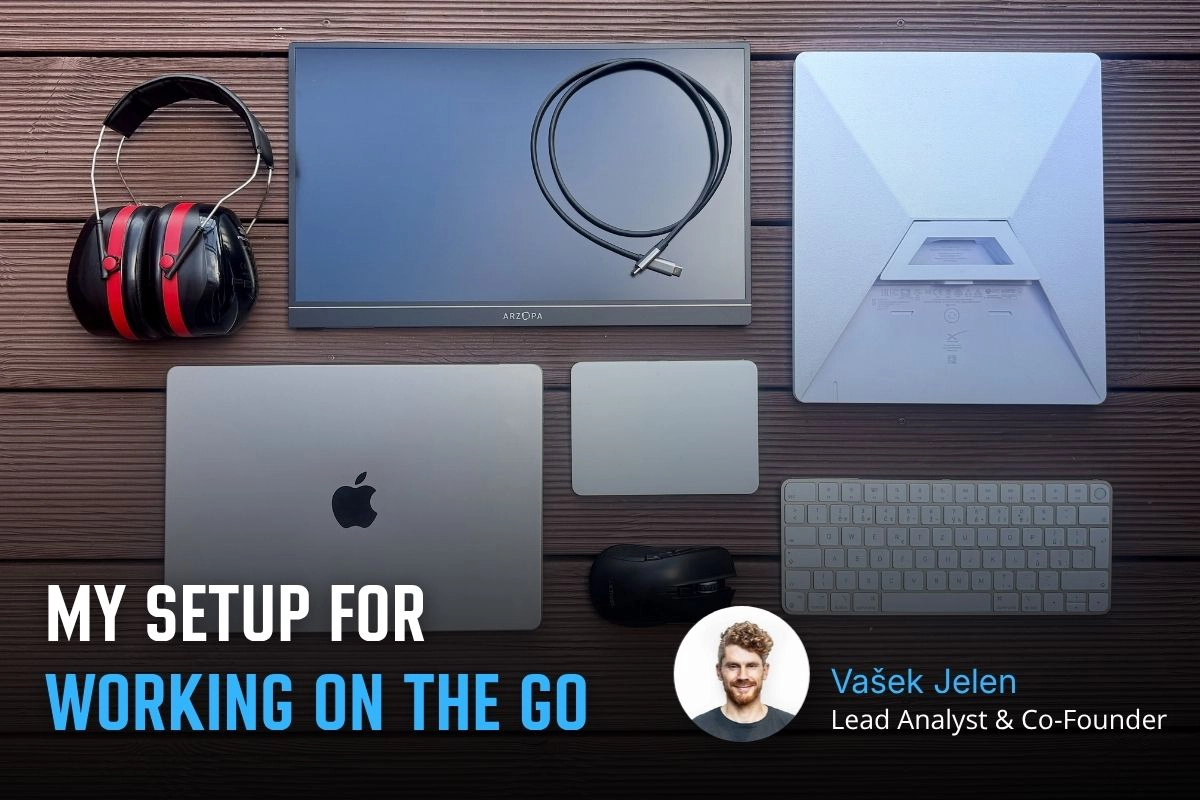
Working on the go has its benefits, but also a few practical challenges. I’m sharing the setup I’ve fine-tuned over the years that lets me work comfortably from anywhere – from connectivity and a second monitor to ergonomics.
I spent almost this entire summer away from my office, apart from a few days. A month in Spain and Portugal, and the rest on various trips around the Czech Republic. At the same time, I needed to work wherever I was – calls with the team and clients, emails, digging around in client data, etc.
I work outside the office (or rather, outside my home office, since we’re fully remote at MeasureDesign) quite often, and having the freedom to choose where I work is great. It lets me spend the whole summer with my family and enjoy time with the kids before they grow up.
But besides the benefits, there are downsides too – I need a good internet connection, plus the hardware and conditions that let me be just as productive as I am in my home office. That means a second monitor, a keyboard with Touch ID, or simply some peace and quiet. And since I’m a bit of a nerd about proper workplace ergonomics, I also want to sit properly while I work.
Below, I’ll explain how I deal with all of this and share the setup I’ve fine-tuned over the years that lets me work pretty comfortably from anywhere.
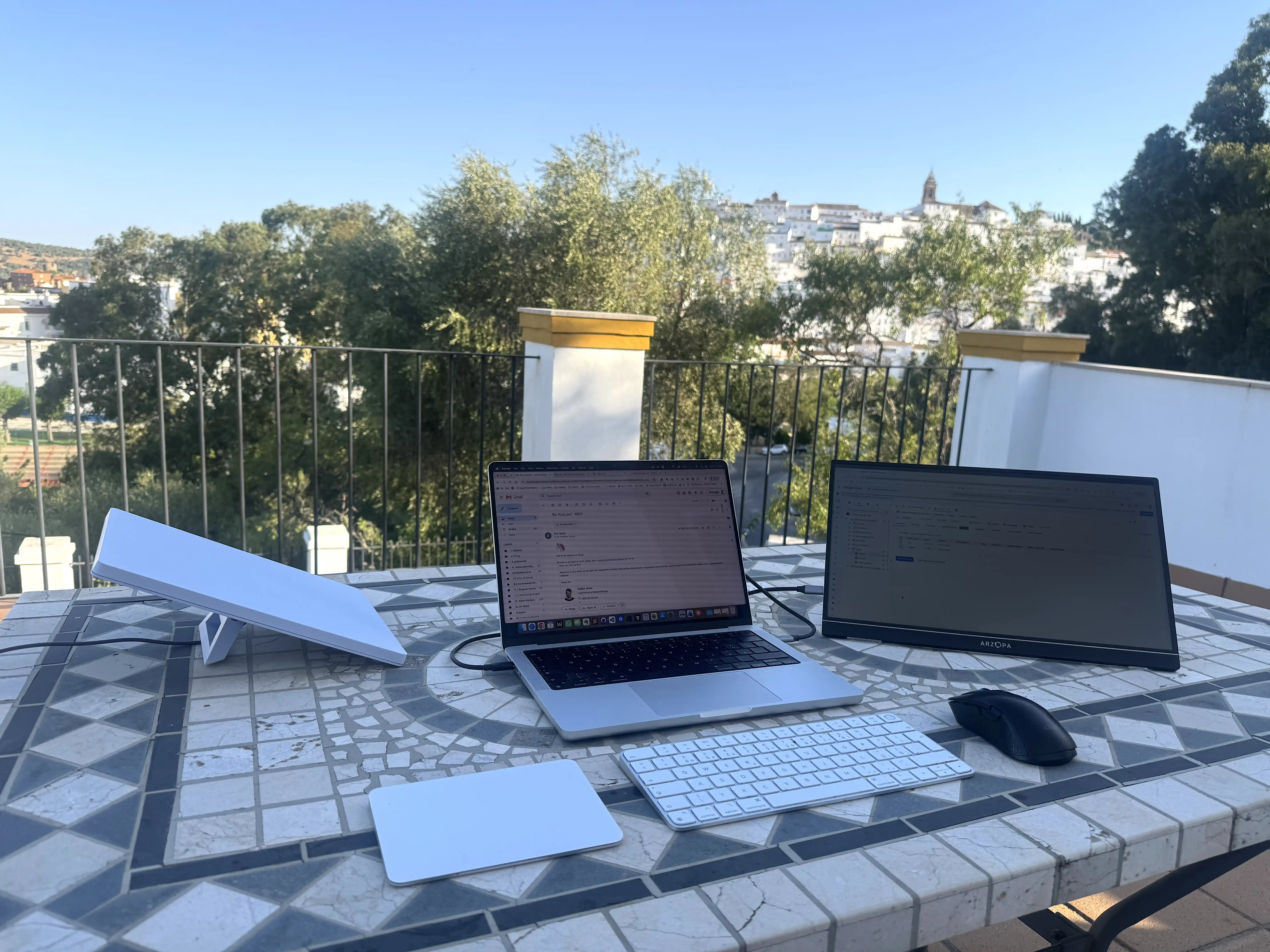
My “office” in Alcalá de los Gazules, Andalusia
Internet connection
Stable, fast internet has always been the biggest pain point of remote work for me, and what kind of internet I’d get at any given place was always a bit of a lottery. You know how it is: when a place on Booking.com says “free Wi-Fi”, that can mean pretty much anything. For example, fast internet only in certain parts of the apartment (say, right next to the open front door), only by the bathroom window, or perhaps just in the shared areas of the property.
I’ve even stayed somewhere where the internet only worked when the weather was bad (no idea why). Many times, I’ve had to find and restart the router myself (routers are usually mounted somewhere near the ceiling, but unfortunately, accommodation rarely comes with a ladder for guests who need to restart them :). In Italy, I once had to update the firmware on the access point serving the entire guesthouse. That was the easy part. The hard part was explaining to the elderly owner, who didn’t speak English, that I was a “specialista informatico” – basically an IT guy. Which I’m obviously not, but otherwise he wouldn’t have believed I could fix it or let me anywhere near it.
I also remember the days before 4G networks arrived, when the local Wi-Fi was the only way to get online. Things improved a bit with 4G, but you still don’t get a signal everywhere (one bar isn’t enough for a Teams call). And sometimes a suitable place to work is somewhere deep inside the accommodation where the mobile signal simply doesn’t reach.
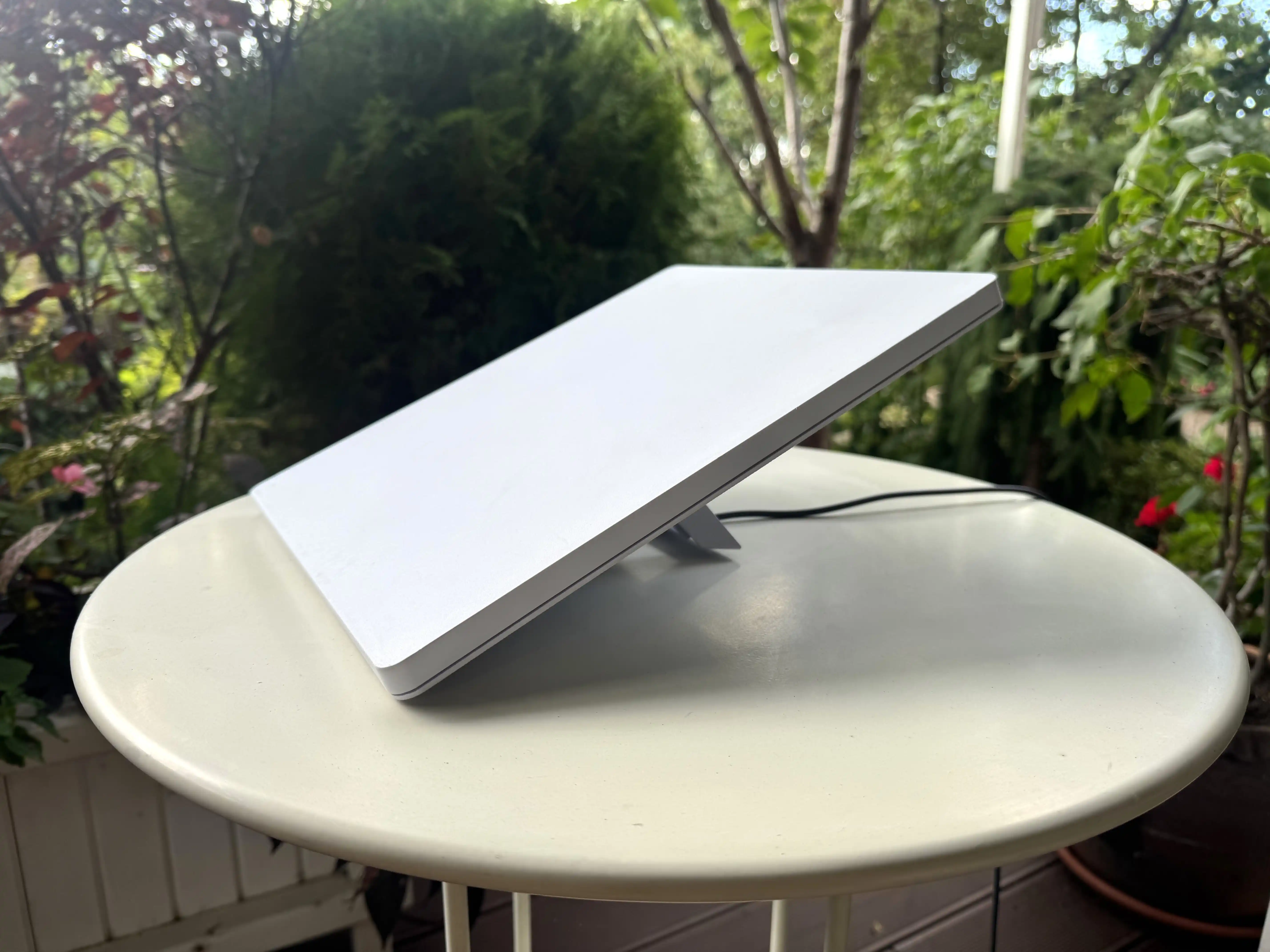
I think I’ve finally solved the connectivity problem this year – with Starlink. I’d always had my eye on satellite internet that could work anywhere, but in the past it simply wasn’t affordable. These days, I have a STARLINK Mini and I’m pretty happy with it.
The dish costs CZK 4,999 and the Roam plan (unlimited data) costs CZK 2,350 per month. Since I sometimes work from my car, I also use a power adapter for the 12 V socket (CZK 1,600), as well as a router from SpaceX (CZK 1,445).
STARLINK Mini
Connectivity should be available anywhere STARLINK has active coverage. I’ve been using it since spring and haven’t had any connectivity issues. I’ve generally been getting download speeds of between 50 and 150 Mbps with good latency, comparable to my Wi-Fi at home.
My son is crazy about football, so besides work, I also tested it by streaming the World Cup on OnePlay, and both the picture and sound worked without any issues. Btw – people in Spain had a few more weeks to cheer for their national team than we did 😎, and we usually watched their matches outside somewhere among the crowds. For the Spain–France semi-final, for example, we were at the bullring in Toledo. There were a few thousand people there, and two of them had French flags and were cheering for France. Spain went through, and it was awesome.
By the way, the connection is stable even while driving, as long as the dish has a clear view of the sky. I tested it, and it works without any issues through the windshield if the dish is placed on the dashboard (another use case for duct tape :). That’s obviously not great from a safety perspective, though – in a crash, the dish would go flying around the car. I’m sure you could rig up or buy some kind of roof mount, but that’s probably more of a camper van solution. I’ve thought about it for my own car (I have a VW Transporter and often work from it), but I’m going to have a pop-top sleeping roof installed, so I’m leaving this one open for now.
Setting up the dish itself is always a bit of a hassle when you’re travelling – you need to find a spot with a clear view of the sky, run the power cable to it and use the app to align the dish so that it’s facing the northern hemisphere, where it can see the satellites. Once connected, the dish starts providing a Wi-Fi signal that one or more devices can connect to. The power cable included with the dish is several dozen metres long, so you can always get it to a suitable spot, but it’s not ideal – I usually ran it through a window, which someone in the family would occasionally close by accident 🤦♂️. After that happened for the third time, I made a protective sleeve for the cable that I put it into whenever I run it through a window. It’s still a bit of a makeshift solution. It would be better if the dish had its own independent rechargeable power source, and I wouldn’t mind if that made the dish a bit bigger.
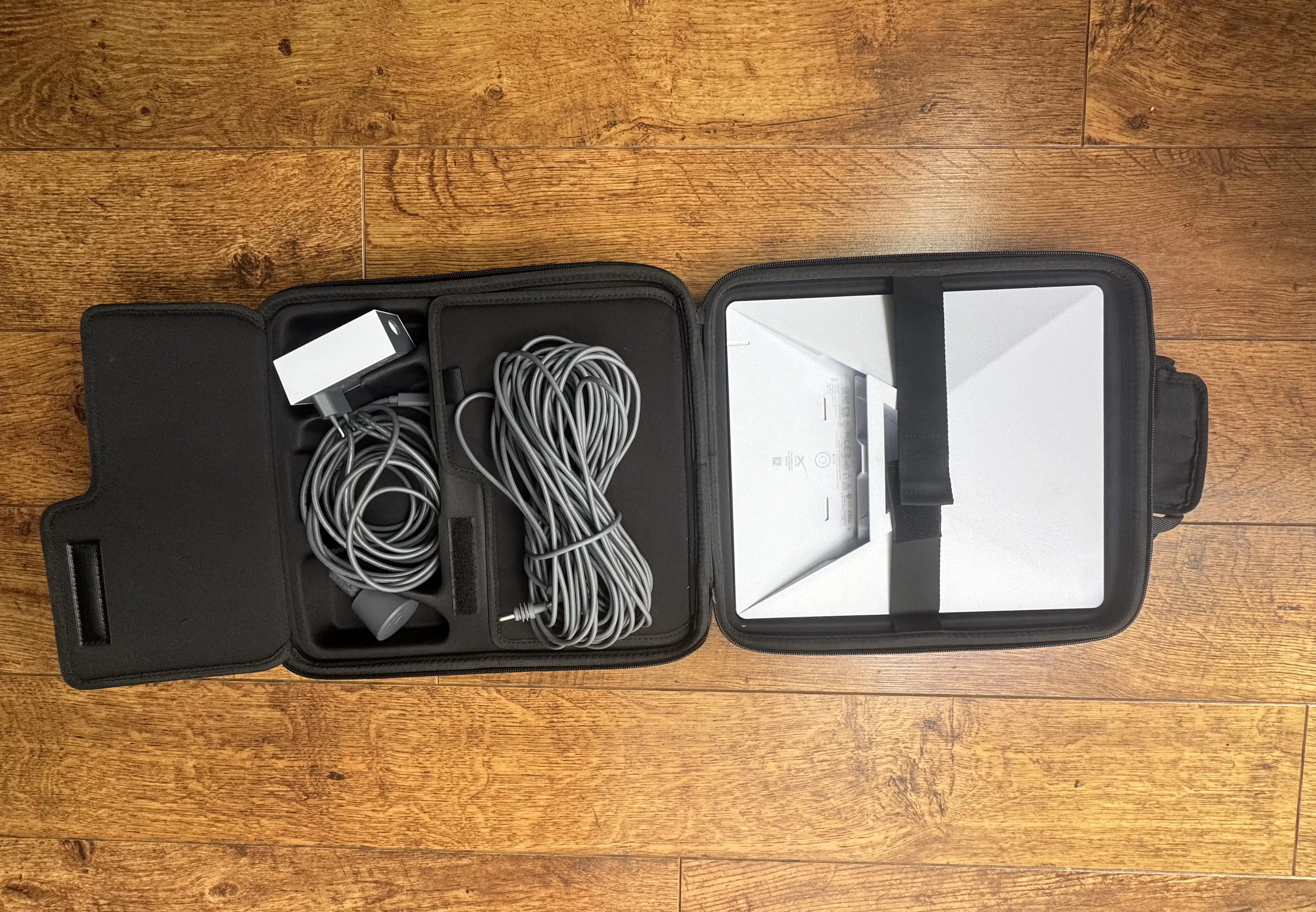
Dish, power cable, car adapter and mains adapter
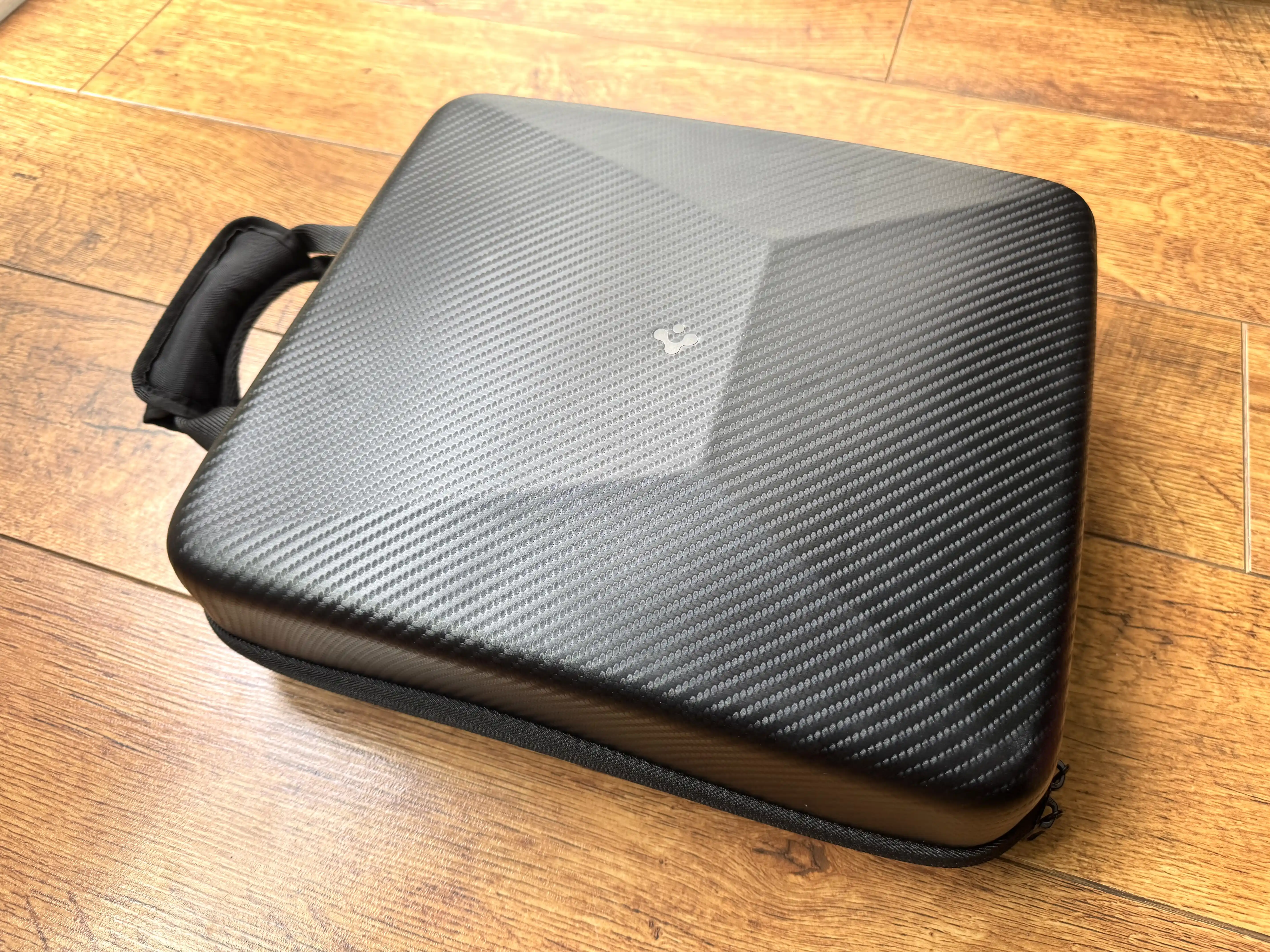
You can find plenty of handy cases for the STARLINK Mini and its accessories on Amazon
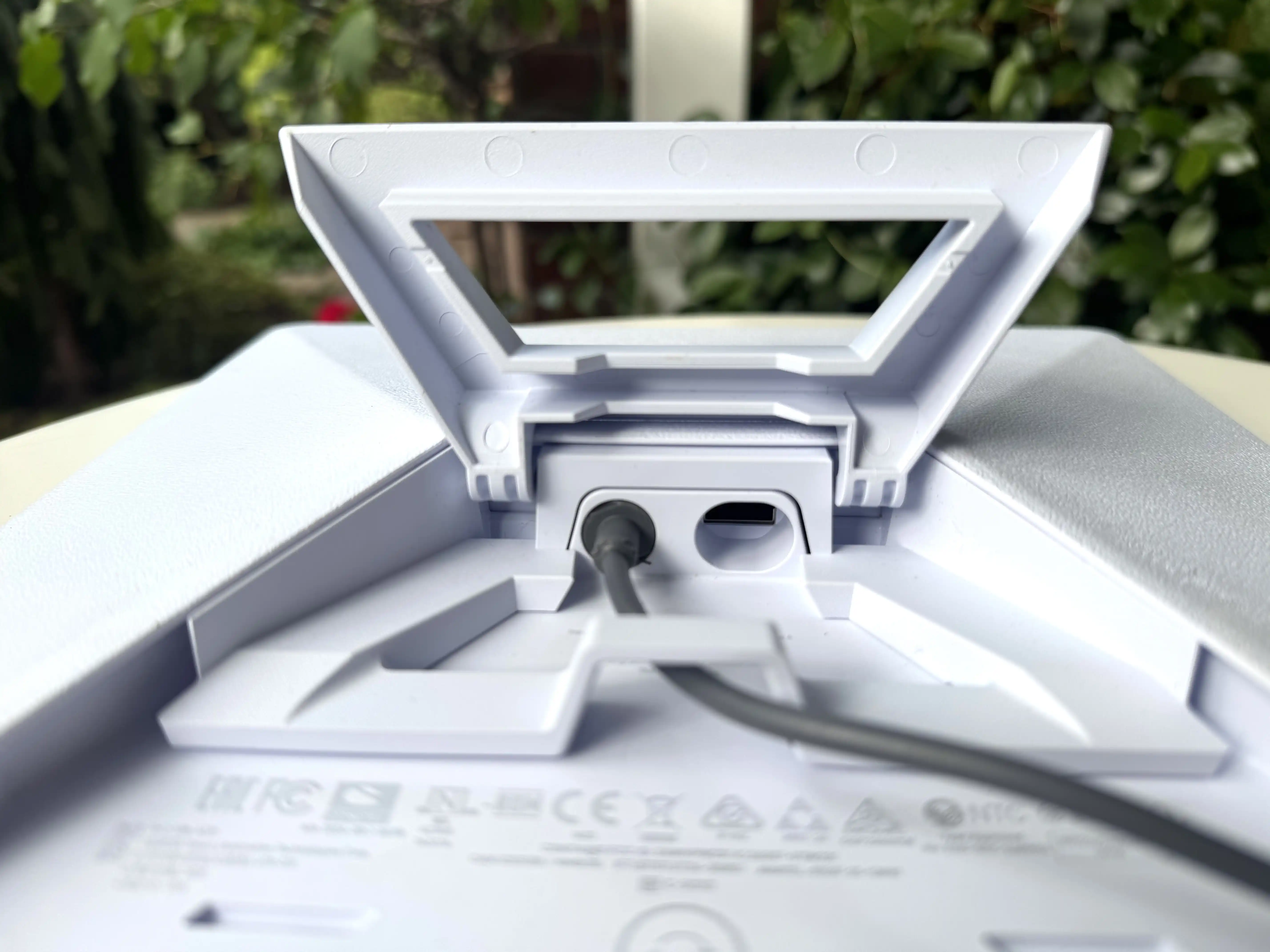
Portable power isn’t that easy to solve either, because even the Mini draws quite a lot of power. According to official SpaceX support, you need a power source with at least 100 W + 20 V for reliable operation. In other words, you need more than a regular phone power bank – you need something more powerful. Power sources like this are available, but flying with them can be an issue – some airlines place restrictions on the capacity of power sources you can take on board (anything over 100 W can be a problem), so you need to check with them. I haven’t felt like dealing with that when booking flights so far, so I’ve been using either a cable plugged into a 220 V socket or power from the car adapter. Btw – if you want to work inside your accommodation while the dish is outside and, for whatever reason, the Wi-Fi from the STARLINK dish doesn’t reach indoors, you can connect a network cable with a standard RJ45 connector to the dish, run the cable inside and connect a router to it. In that case, you end up running two cables through the window ☺️.
Dish power connection and the network cable port next to it
Btw – one small downside of the STARLINK Mini + Roam plan is that you can’t buy it under a company registration number. There are other products for business customers, but they’re more expensive. One advantage of the Roam plan, though, is that you pay month by month, and if you don’t need it for a particular month, you can simply pause it in the app.
Laptop and second monitor
I’m used to working with two monitors and don’t want to give that up when I’m travelling. Besides the work itself, they’re essential for calls with the team or clients. During a call, I need to be able to see the participants clearly on one monitor while sharing whatever I’m showing them on the other (you can do this in Google Meet using picture-in-picture, but that doesn’t work for me, and it sometimes drives me crazy when someone uses it and the floating box happens to cover something I need to see). So I need two monitors, especially for an important call where we’re showing clients data, reports, etc. It lets me see their reactions while presenting comfortably on the second screen. Btw – I generally don’t understand companies where it’s normal to have cameras turned off during calls. I find it rude. Non-verbal communication is important to me too, because it can provide signals or information, especially when the call isn’t in Czech. At MeasureDesign, we always have our cameras on, and if a client has theirs off, I’ll usually just ask them directly to turn it on if we’re having an online call anyway.
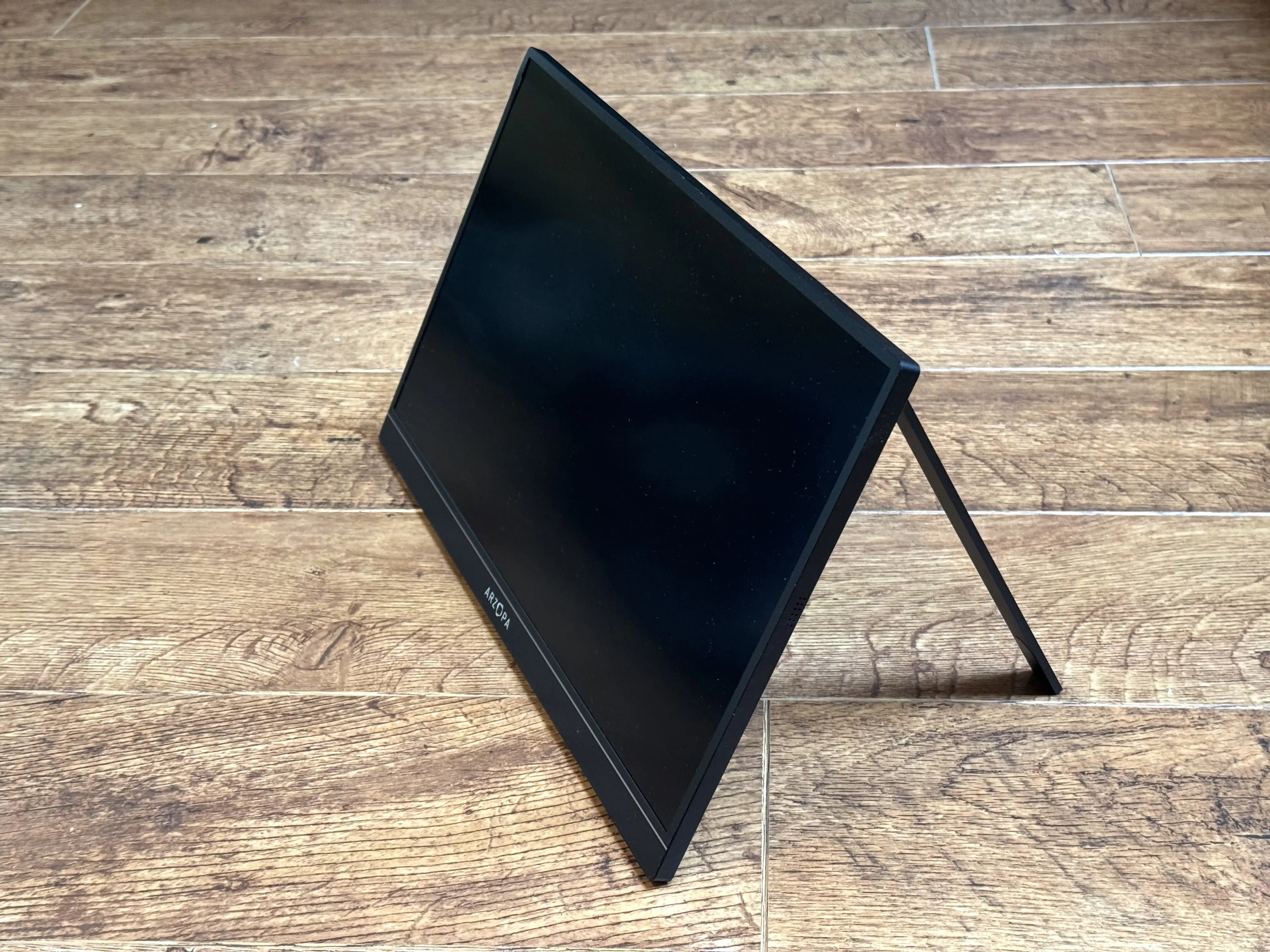
When I’m travelling, I use a 17.3" Arzopa portable monitor as my second display. I connect it to my laptop (currently a MacBook Pro, M4) via USB-C, which also powers it. It has a matte screen, which works better for me when I’m working outside, and it weighs less than a kilogram, so it doesn’t take up much of my baggage allowance when I fly.
Arzopa portable monitor
Peace and quiet
When my work requires focus, I need peace and quiet. I can’t work with music or the radio playing like some people can. When I have a focus slot, I turn off all notifications and keep only the windows of the apps I’m working in open.
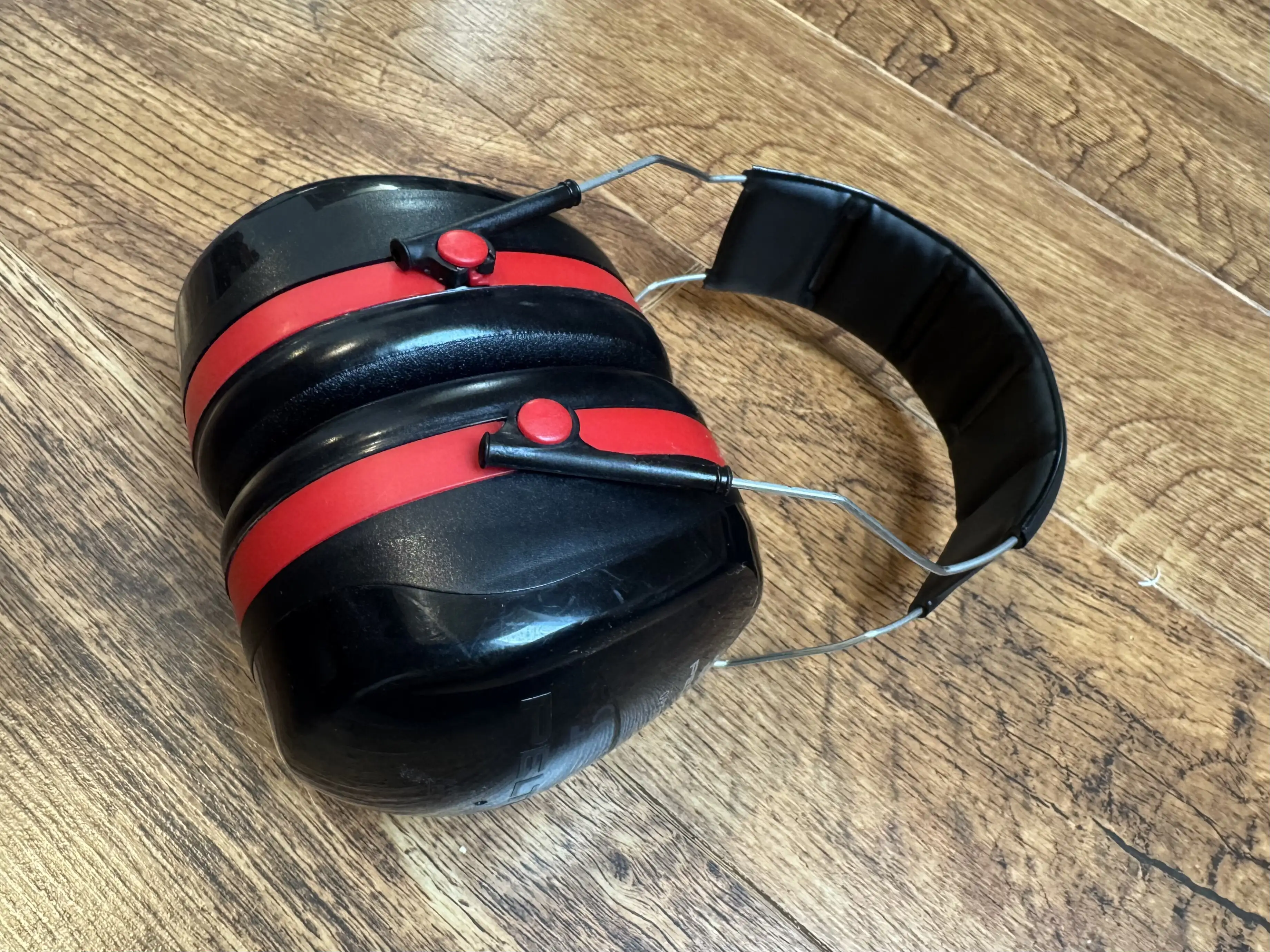
When I’m travelling, I do a lot of my work early in the morning and before noon. In the morning, while the family is asleep, I have focus slots for deep work. Later in the morning, when the kids are already running around me, I do other tasks that don’t require as much concentration (emails, planning, etc.). I get the quiet I need with Peltor Optime shooting earmuffs. I’ve never actually used them for sport shooting, but I work in them pretty often, and they’re especially useful when I’m travelling. They don’t provide absolute silence, but they reduce the noise to a manageable level that lets me concentrate. I’ve been using Peltor shooting earmuffs for years. Back when I worked in an open-plan office at the agency Actum, I used to wear them for part of the day. Some people laughed that I looked like I was working in air traffic control, but besides filtering out the noise, in an open-plan office they also filtered out people who just wanted to chat. Plus, after all these years, I’ve probably built some new neural pathways, because the pressure around my ears when I put the earmuffs on is enough to put me into focus mode ☺️.
Peltor Optime
Desk
When I’m travelling, the desk is more important than the chair. There’s nothing worse than working at a desk that’s too low. Sometimes when I visit an agency or company, I feel sorry for people who don’t pay attention to workplace ergonomics, with their desk and monitor set too low, and I can see how they hunch over when looking at the screen.
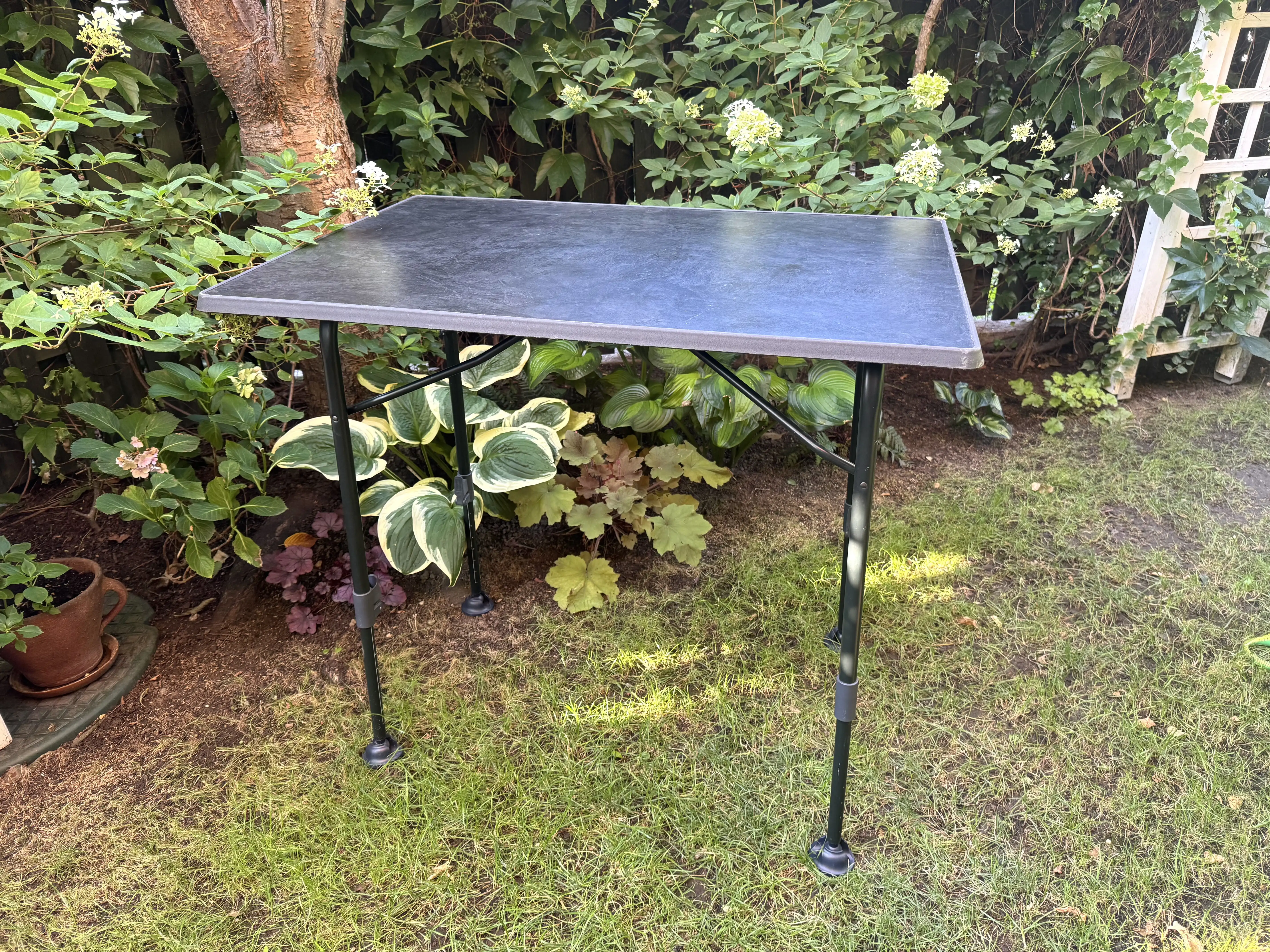
I’m a bit obsessive about this. For the Hack Your Way hackathon, where I knew I’d be spending three days at a computer, I actually brought my own height-adjustable desk from Alza in my Transporter. I don’t normally do that, but when I’m driving somewhere where I’ll be working rather than flying, I bring a sturdy camping table with telescopic legs. At the moment, I use a Westfield Performance Aircolite measuring 70 × 100 cm.
Westfield Performance Aircolite
It’s a large, stable table, and thanks to the telescopic legs, I can level it on any terrain, adjust the height or raise it high enough to work standing up. Sometimes, when I really need some peace and quiet, I set it up inside the van (the van has an auxiliary heater, a second battery and a 220 V inverter, so I can work there in any weather) and work from there.
Who is behind the article
Vašek Jelen
Lead Analyst & Co-Founder
As Lead Analyst and Co-Founder of MeasureDesign, Vašek connects digital, media and customer data, helping companies unlock its full potential.
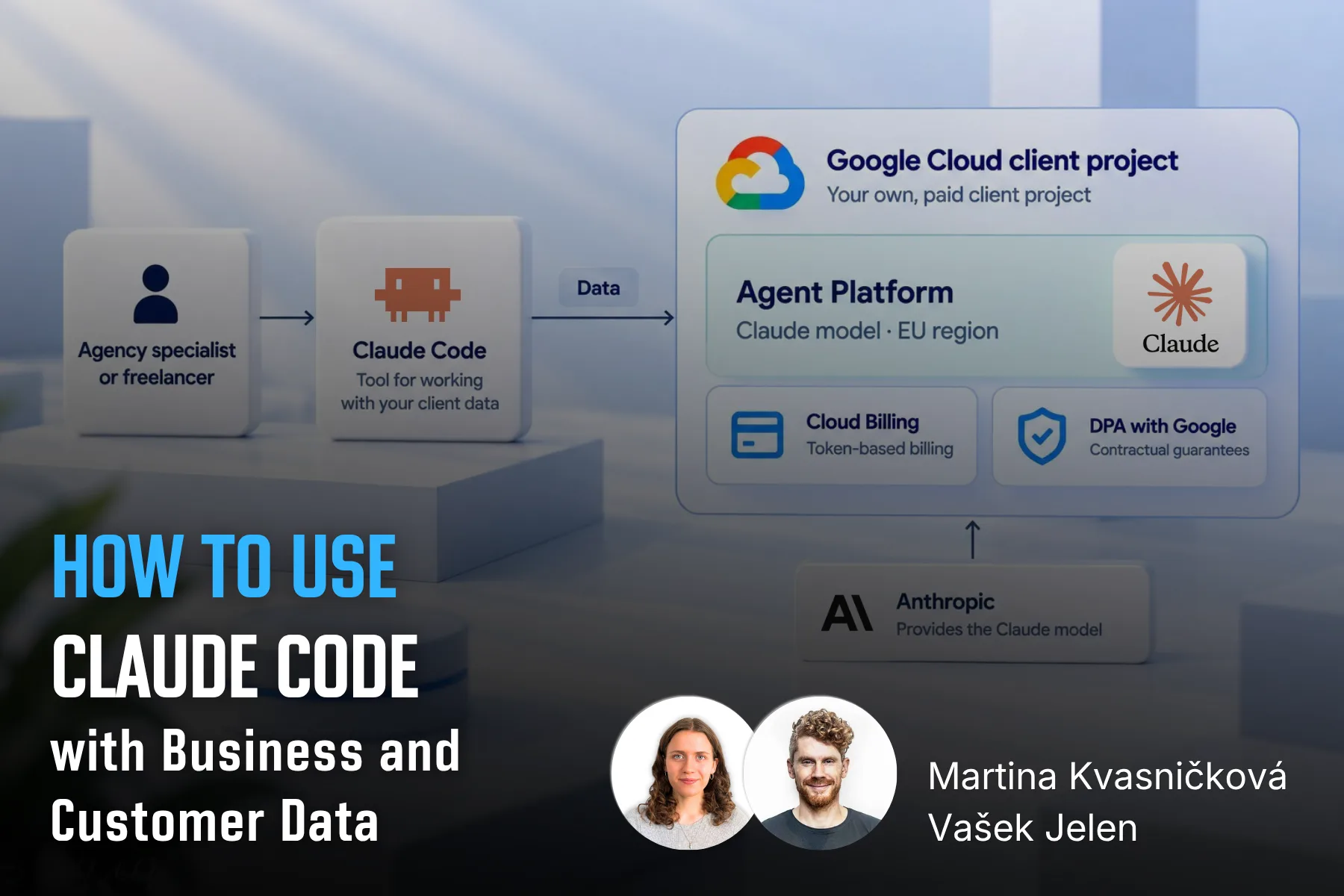
Working with client data in Claude Code requires control over how it's processed. This article covers setting up Claude Code through Google Cloud, so that the data are processed in the EU, according to the DPA and without model training.
Google Ads is one of the easiest media sources to connect to BigQuery. This guide covers DTS setup, Standard vs. Custom reports, service accounts, MCC structures, PMax tables, and common limitations.
Setting up a Google Cloud project takes just a few minutes. But basic guides leave out some important details. Here’s what to watch out for with project ownership, the free trial, and billing roles to avoid unnecessary problems later.
This year at MeasureCamp Czechia, MeasureDesign gave three talks. We covered AI analytics on company data, identifying bot traffic, and how to combine working in analytics with raising young kids.
Working on the go has its benefits, but also a few practical challenges. I’m sharing the setup I’ve fine-tuned over the years that lets me work comfortably from anywhere – from connectivity and a second monitor to ergonomics.
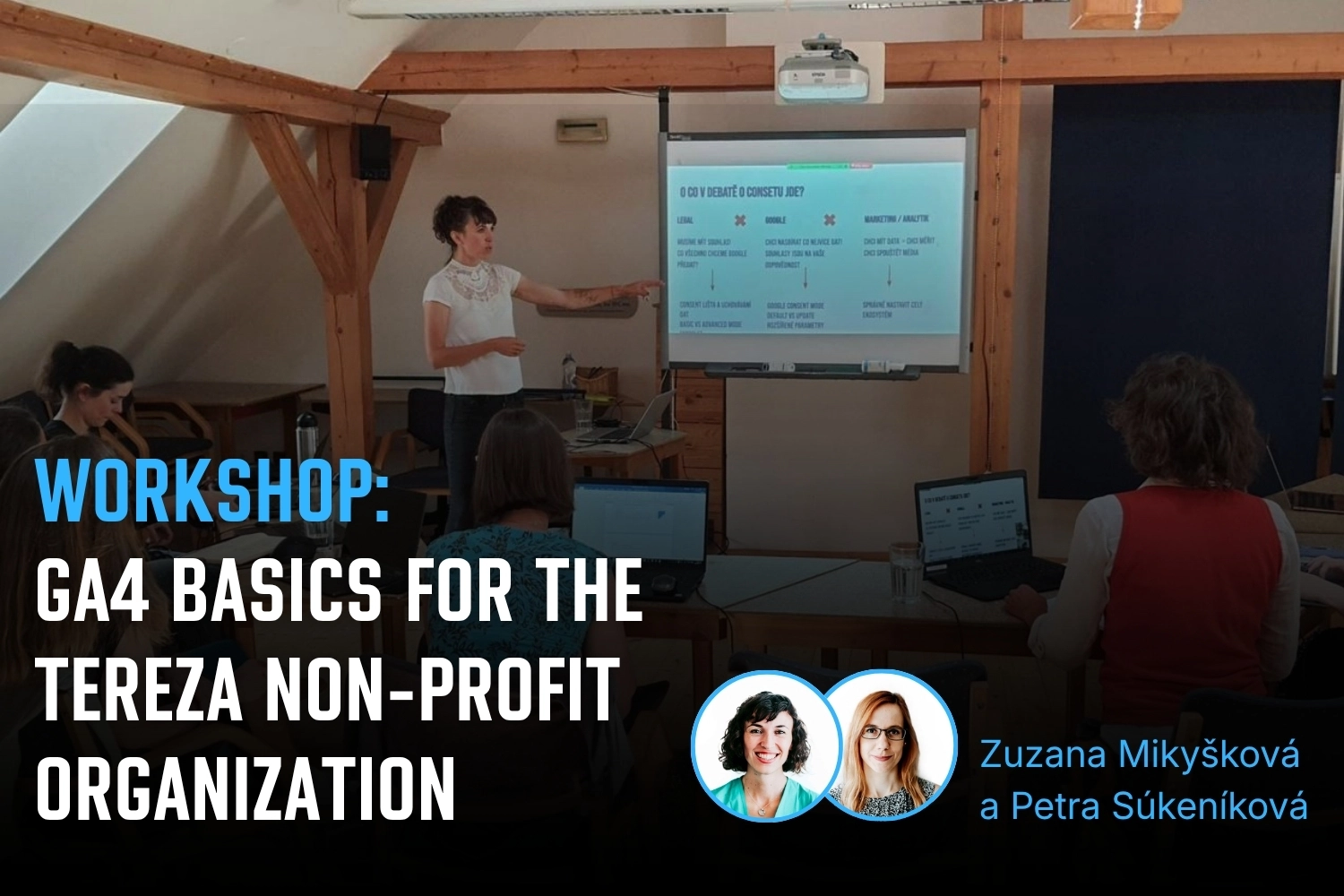
What should a PPC specialist know about analytics and data collection? In our workshop for uLab, we covered the entire chain, from the technical components of tracking and media platforms to collecting and activating first-party data.
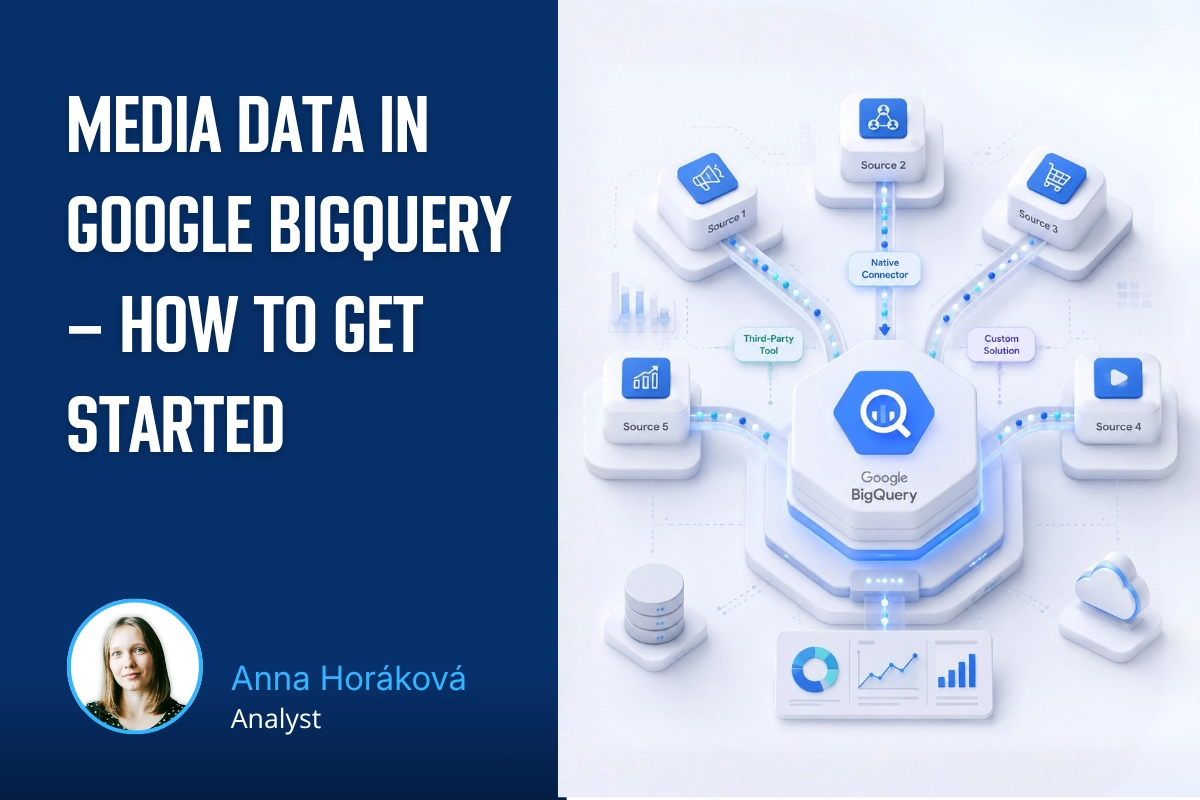
How do you get data from multiple ad platforms into a single data warehouse, typically BigQuery? We’ll walk through the core architecture and key decisions before you start exporting data from Google Ads, Meta Ads, Sklik, and other platforms.
Part 3 of our first-party data series gets technical again – we'll show you how to check that data is correctly reaching each system and doing what it should. We'll look at outgoing hits in DevTools and at checks directly in the ad platforms.
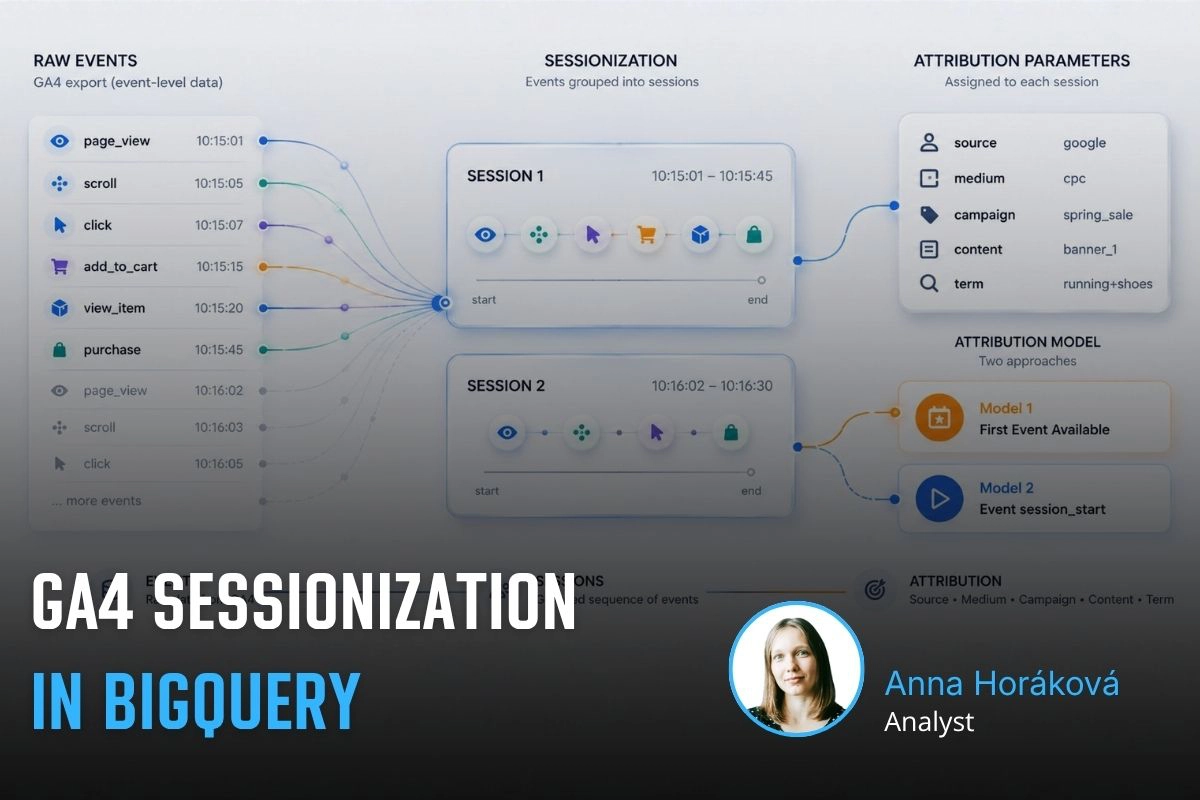
A detailed guide to sessionizing the GA4 BigQuery export — from identifying sessions and reliably ordering events to two attribution models (First Event Available and Session Start), their limitations, and validating agreement between them.
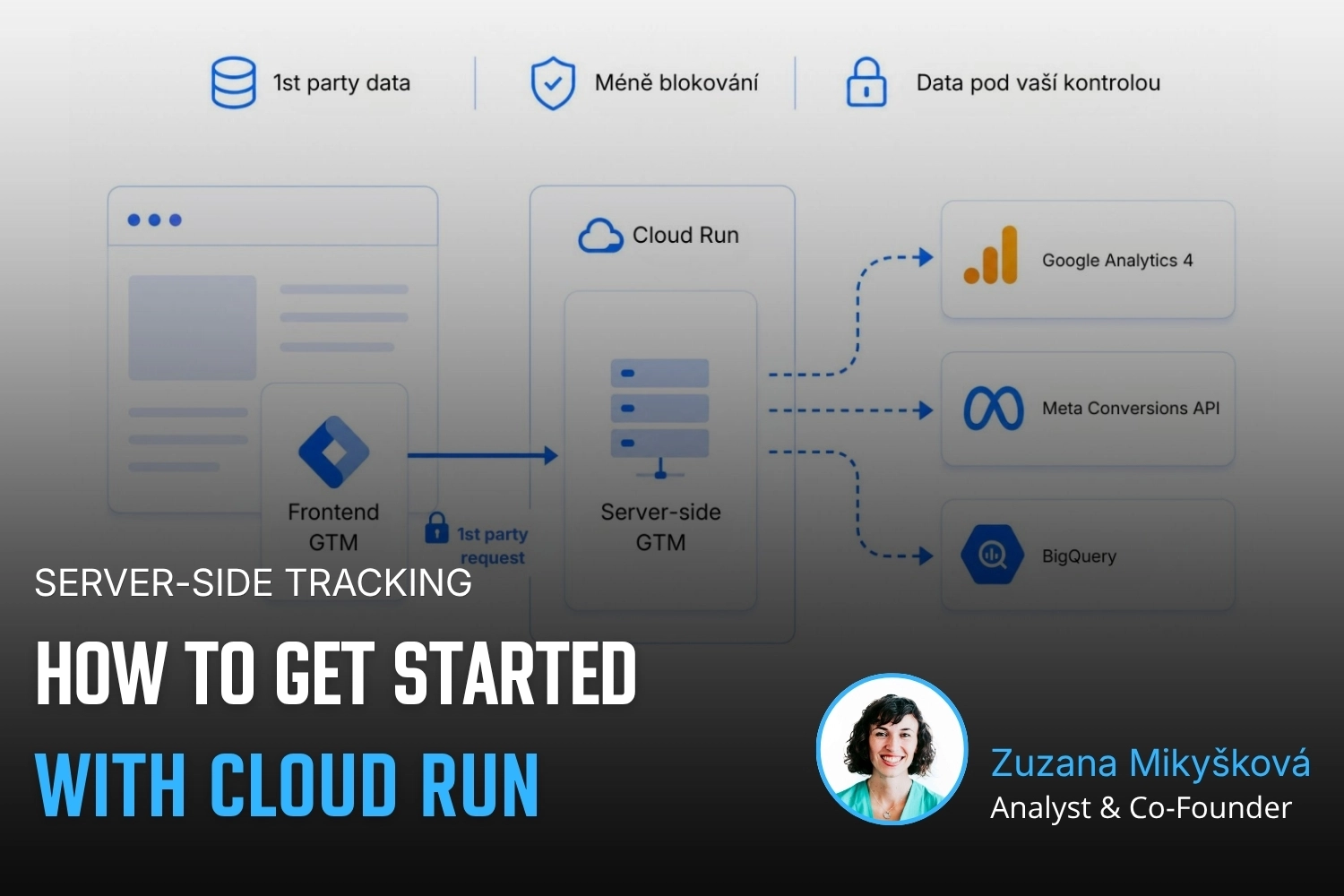
Learn how to deploy server-side tracking on Google Cloud Run. Compare Stape vs Cloud Run, configure load balancers, choose billing types, and test your setup.
Complete technical guide to collecting first-party data via dataLayer, normalizing, hashing, and sending through server-side GTM to Google Ads and Meta.
Testing ClickUp MCP: hands-on experience with AI-powered automation, security concerns with access tokens, practical limitations, and who should use it.
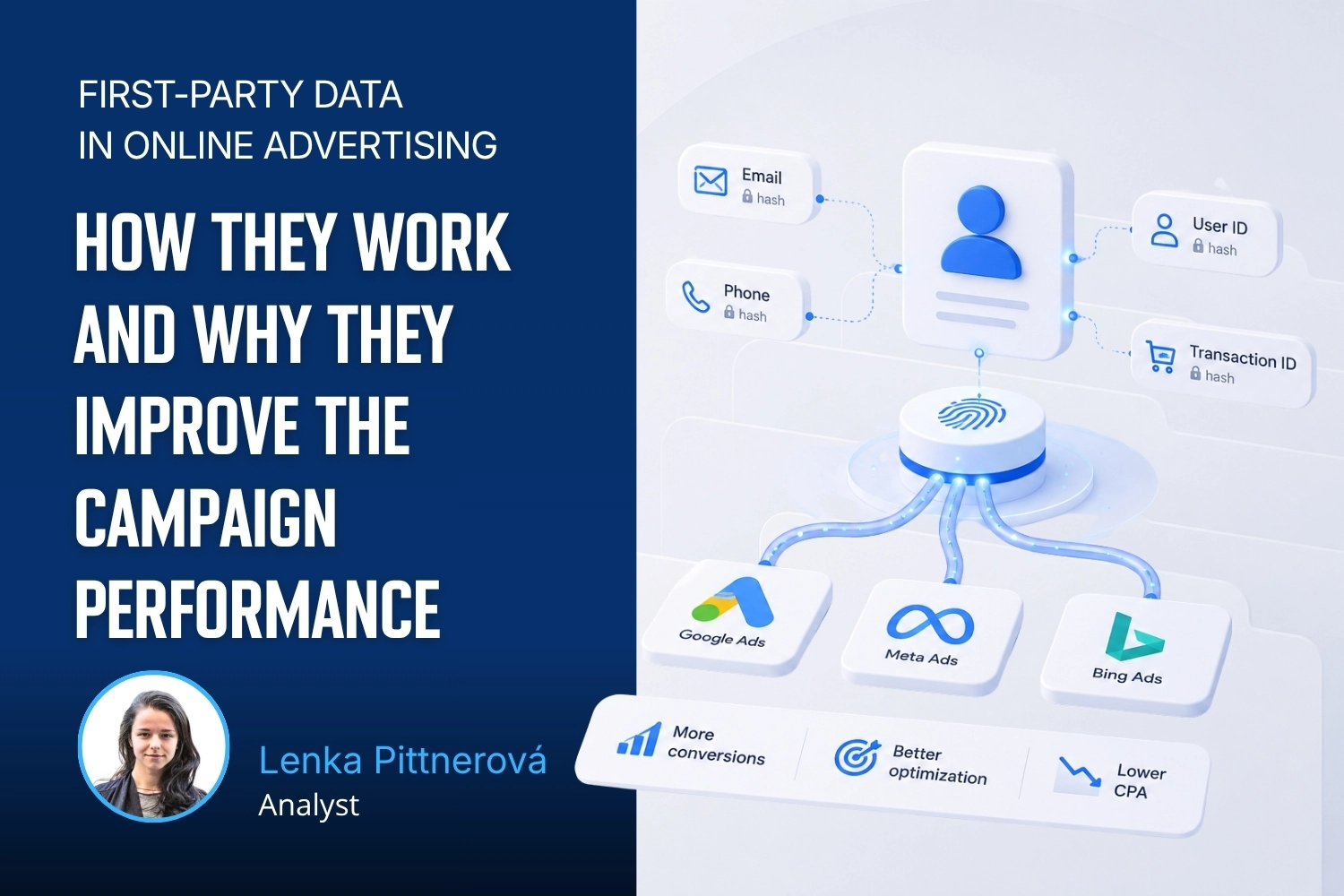
Learn how first-party data improves campaign performance, measurement accuracy, and cross-device tracking. Discover practical ways to collect and use it.
Workshops on advanced digital analytics: BigQuery, cookieless tracking, consent, attribution, and building data warehouses for reporting and activation.
Why analytics is an excellent career for women, including those returning from maternity leave. A personal story about transitioning into data analytics.
A look back at Reshoper - advising e-shop owners on tracking and measurement, plus a roundtable on marketing automation with insights on self-hosted N8N.
From Idea to App in 48 Hours 🚀 Building AI-powered apps at #HackYourWeekend using Claude Code, tracking with BigQuery, and lessons from team development.
Recap of PPC Camp: my presentation on legally measuring data without user consent - cookieless tracking, sGTM, BigQuery, Facebook conversions, and Advanced Consent Mode risks.
Ready-to-use BigQuery SQL script to calculate Easter dates (2024-2100) using Computus algorithm. Perfect for filtering GA4 data and analyzing seasonal trends.
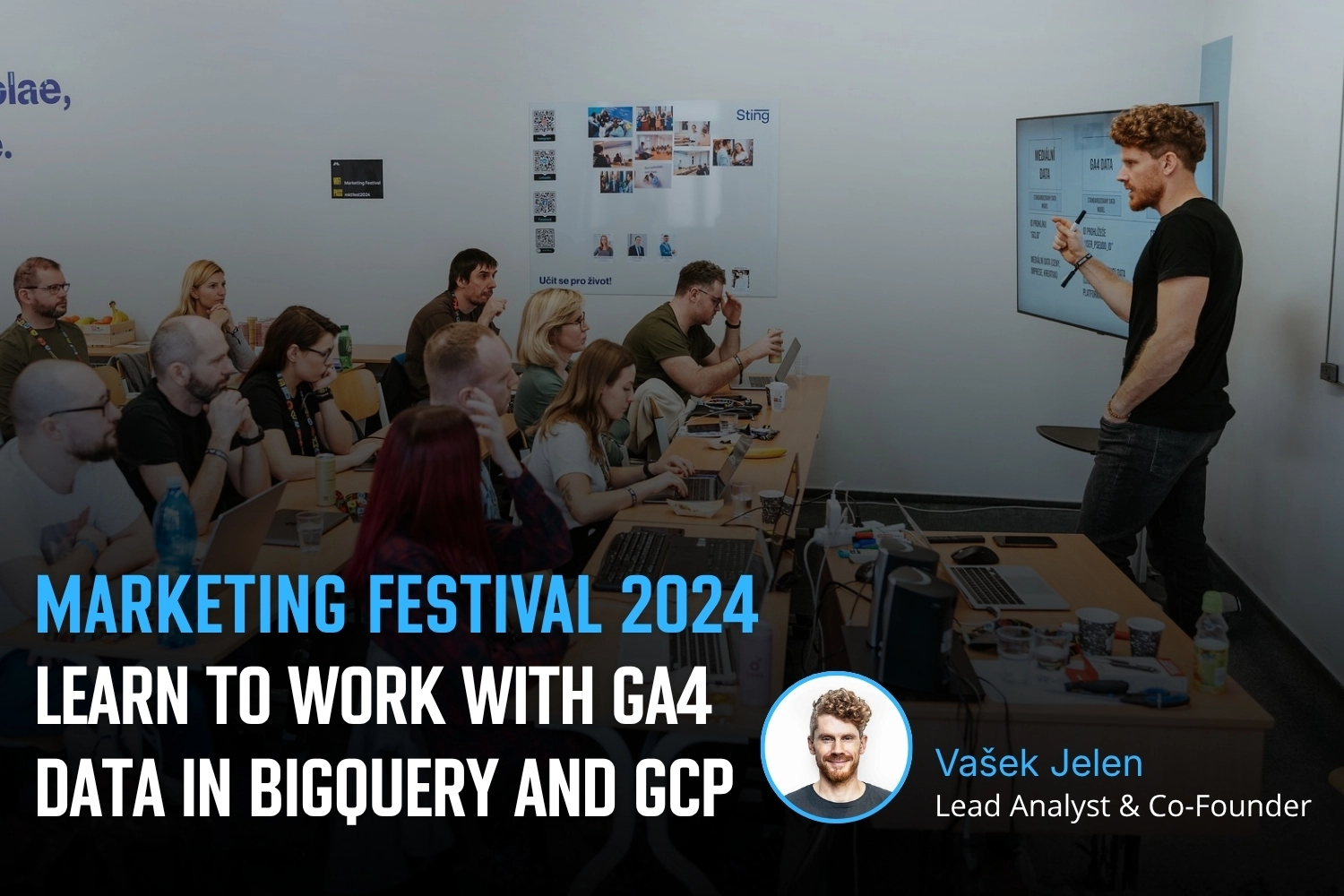
GA4 + BigQuery in practice: connecting analytics, CRM & media data, real-world use cases from IKEA, Shoptet, McDonald's & Česká spořitelna, and what it unlocks for marketing.
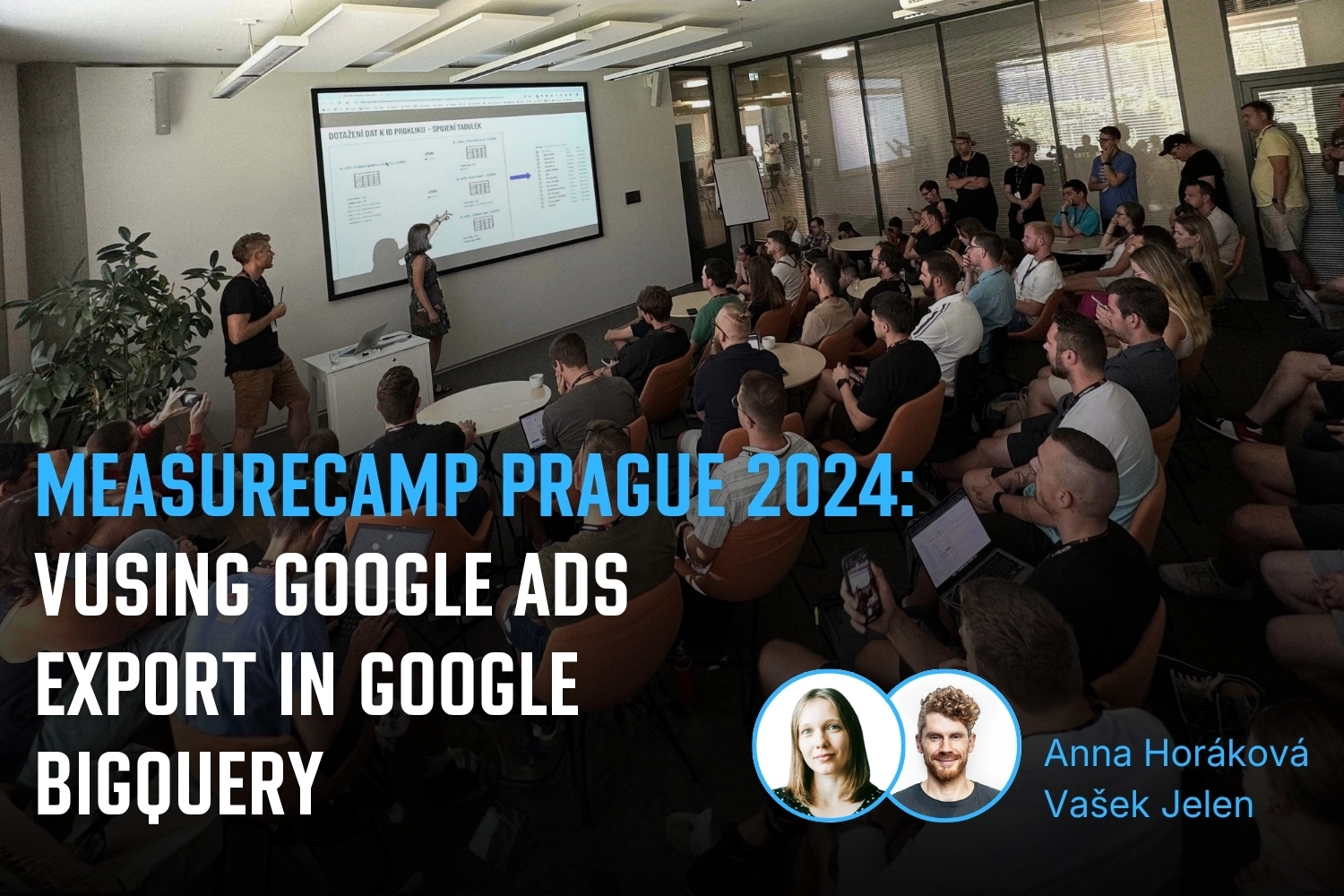
Vašek and Anička presented at MeasureCamp Prague on using Google Ads export in BigQuery, combining it with GA4 and CRM data to solve attribution issues.
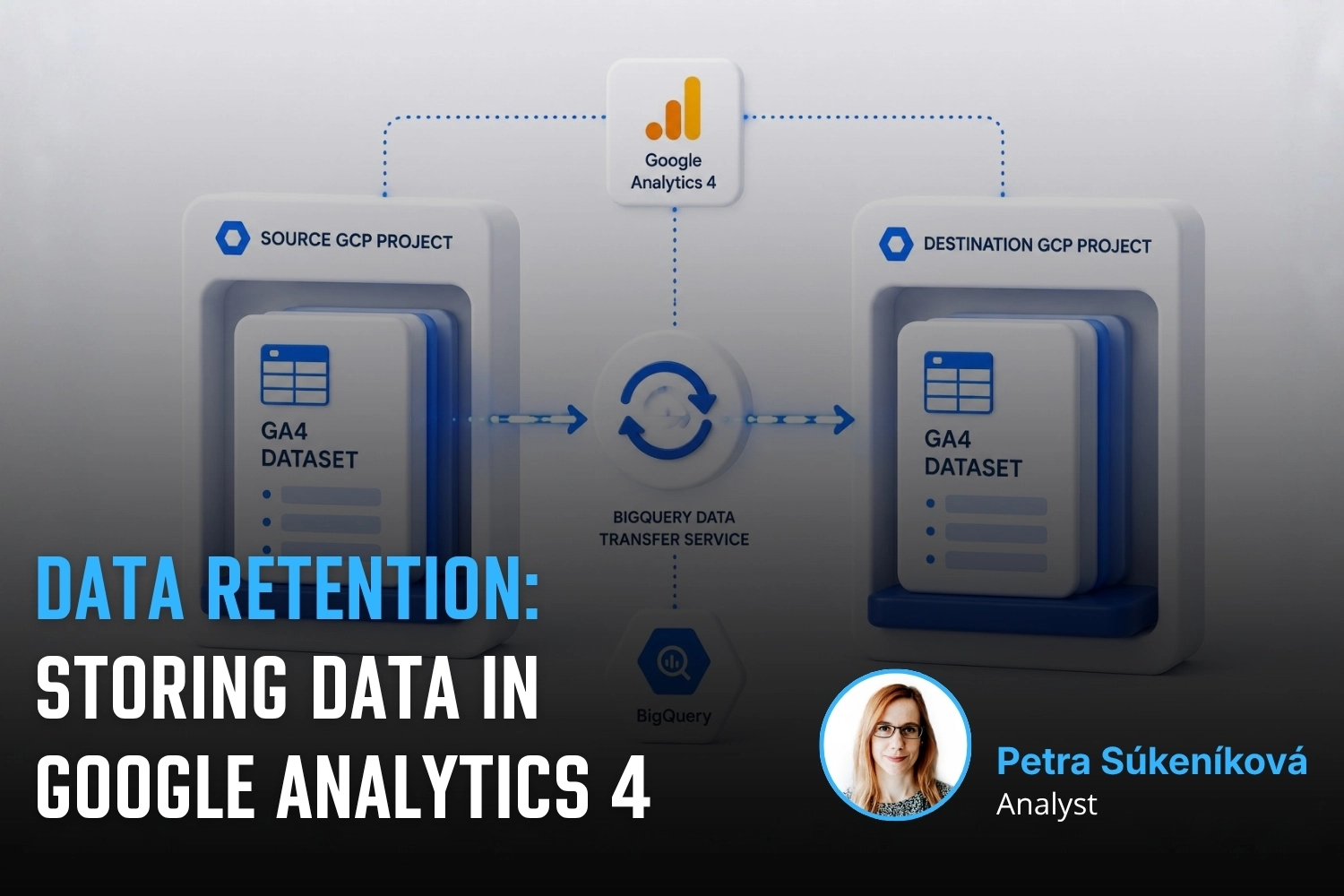
Learn how to extend GA4 data retention from 2 to 14 months. Understand what retention affects, how to change settings, and what happens after data expires.
Public webinar on evaluating campaigns using GA4 dataset in Google BigQuery. Featuring Vašek Ráš and Honza Tichý on DBT, SQL queries, and data flattening.
Jana focuses on UX, content and website development at MeasureDesign, making websites clearer and easier to use. She also designs and builds sites for her own clients and values teamwork and finding solutions together.
Vojtěch Černý
IT & Data Developer
Vojta works at MeasureDesign on developing technical and data solutions that are not only functional, but also practical and easy to use. He enjoys combining web development, automation, and data work to create solutions that make sense both from the user’s perspective and in terms of the technical foundations behind them. What he finds most rewarding is turning a more complex problem into a clean and reliable solution.
Jiří Otipka
Analyst
Jirka has been working in marketing for over 10 years, and if there is anything he enjoys more than numbers themselves, it is connecting them. He loves mathematics and data analytics, and thanks to his interest in exploring source code, he can easily communicate with developers in their own language. At MeasureDesign, he specializes in connecting new data sources - building custom connectors in Python, testing data quality, and exploring which data combinations make the most sense from a business perspective. He is completely at home in Looker Studio and also has extensive experience evaluating PPC campaign performance.
Lenka Pittnerová
Analyst
Lenka joined MeasureDesign at the end of 2025, bringing extensive experience from PPC marketing, where she spent many years working with Google Ads, Meta Ads, and other advertising platforms. While managing campaigns, she repeatedly ran into the same issue - poorly set up or insufficient web analytics, which made effective optimization nearly impossible. This challenge initially led her to analytics out of necessity, but over time she discovered that she enjoyed it even more than advertising itself. Today, she focuses primarily on implementing web analytics and data solutions that provide companies with high-quality, reliable data for strategic decision-making and performance marketing. She continues to work on selected PPC projects as well - not only because she still enjoys them, but mainly to stay closely connected to the reality of media platforms and the real needs of clients.
Martina Kvasničková
AI & Data Research
Marťa helps integrate AI into everyday work—making it faster, more efficient, and accessible to every team member. What excites her most is finding practical ways to use AI and turning new technologies into useful tools.
Anna Horáková
Analyst
Anička has over 7 years of experience in the agency world, where she has managed social media ad campaigns for clients, and especially for content-driven websites, her favorite. Wanting to broaden her perspective beyond campaign data, she gradually shifted her focus toward web analytics. She joined our team in 2022 and now specializes in data analytics, using GA4, BigQuery, Looker Studio, and other tools to connect and dig deeper into data — delivering insightful analyses and valuable input for business decisions. Anička was a member of our team until 2026.
Zuzana Mikyšková
Analyst & Co-Founder
Zuzka's career path led her through corporate innovation and research management, running word-of-mouth projects, and later to a digital agency, where she managed website development projects. However, Zuzka is naturally curious and wanted to understand how a website actually works once it is launched into the world. That curiosity led her to study web analytics — and eventually to a key collaboration with Vašek. In 2019, they founded the company together.
Vašek Jelen
Lead Analyst & Co-Founder
Vašek has been working in digital analytics for over 15 years — from setting up tracking to data storage, visualization, and interpretation. He helps companies keep their data in order and make full use of it. He focuses primarily on data from digital platforms such as websites, apps, and client zones, and on connecting that data with other business data like media and customer data. After years of freelancing, he co-founded the analytics studio MeasureDesign, where, in addition to working on analytics projects and bespoke training sessions, he also mentors and educates new analysts.
Blanka Hejduková
Back Office
Blanka joined our team in 2024 and has been responsible for back-office operations, including invoicing and administrative tasks, ever since. She draws on her experience from the Czech Post and her background in financial management to keep everything running smoothly. In her free time, she enjoys traveling with her two children and finds relaxation in working in her garden.
Markéta Svěráková
Analyst
Markéta started out in marketing, but then came maternity leave — and with it, total chaos. In an effort to hold on to the last bits of sanity, she turned to data. After all, numbers don’t yell, spill cereal into your keyboard, and at least they make some sense. She completed a data analytics course at Engeto Academy, where she bonded with SQL, Power BI, Excel, and Python, and started looking for patterns outside the bounds of children’s coloring books. Today, at MeasureDesign, she helps clients understand what their numbers are really saying.
Petra Súkeníková
Analyst
She joined MeasureDesign in 2023, specialising in measurement implementation and reporting. Her favourite moment is when, after all the setup and testing, the first data finally starts flowing in. Her biggest challenge? The unexpected (and often undocumented) changes from Google – those are the times when every analyst turns into a paranormal behaviour expert. 👻 She was a member of our team until summer 2026.
Klára Belzová
Analyst
Klára has been with the company since 2019. She focuses mainly on web analytics but is not afraid to dive into data work in BigQuery. What she enjoys most is guiding clients through the entire process — from defining their needs to implementing tracking and creating the final data visualizations.
She gets an almost suspicious amount of joy from a clean and well-organized GTM container or a report full of useful data.